


Corporate Intelligence in the UK: The Complete Guide
Corporate intelligence is the practice of building an evidence-based picture of a company: who owns and runs it, how it is performing, what it owes and what risks it carries. This guide explains what UK corporate intelligence covers, where the data comes from, how ECCTA 2023 has changed it, and how to choose a platform.

Who Uses Corporate Intelligence?
Private Equity & VC Investors
Screen UK targets before the deal advances: validate ownership, check director verification, price deals with three years of financials and AI valuations, and monitor portfolio companies for compliance risk.

In-house M&A & Corporate Development
Validate acquisition targets, map group structures and uncover undisclosed relationships before legal due diligence begins, and screen whole pipelines with a bulk CSV audit.

Compliance & KYC Teams
Onboard corporate clients with sanctions, adverse media and tax defaulter screening, then verify directors and beneficial owners, with every alert tracked to resolution in one workbench.

Advisers, Credit & Procurement Teams
Accountants, lawyers, credit teams and procurement teams use Probe Digital to check clients, customers and suppliers for financial strength, CCJs, charges and ownership risk.

The Six Building Blocks of UK Corporate Intelligence
A complete picture of a UK company rests on six areas. A gap in any one of them is where most bad decisions start.
1. Ownership and control
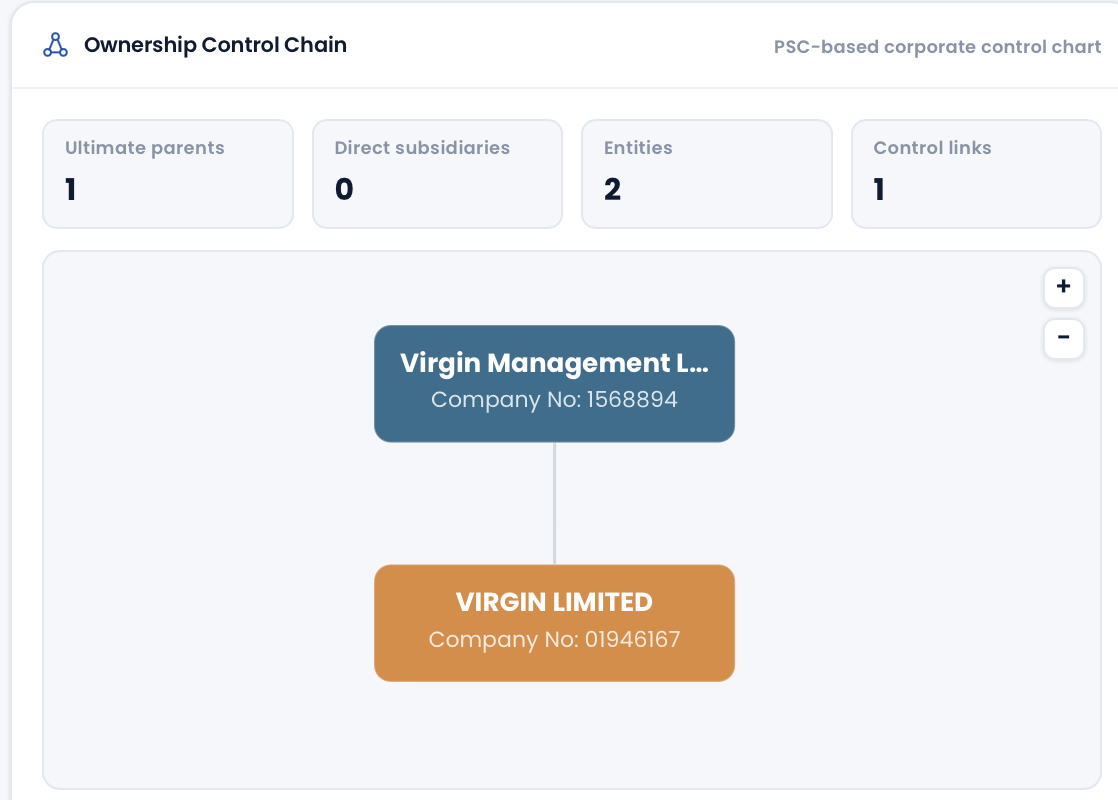
Who really owns the company? The register of people with significant control (PSCs) records anyone holding more than 25% of the shares or voting rights, or who can appoint the board or otherwise exercise significant control. Where a PSC is another company, the chain has to be followed upwards until it reaches individuals. Overseas holding companies, trusts and nominee arrangements are where control is most often obscured. Beneficial ownership and PSC checks trace that chain to the people at the top.
2. Directors and their history
The people running a company often matter as much as the company itself. A director's other appointments, current and resigned, show whether they have a pattern of failed businesses, unpaid creditors or companies that were dissolved shortly before a new one appeared. Since November 2025, their Companies House identity verification status has become a further signal. A director background check brings all of this together.
3. Financial health
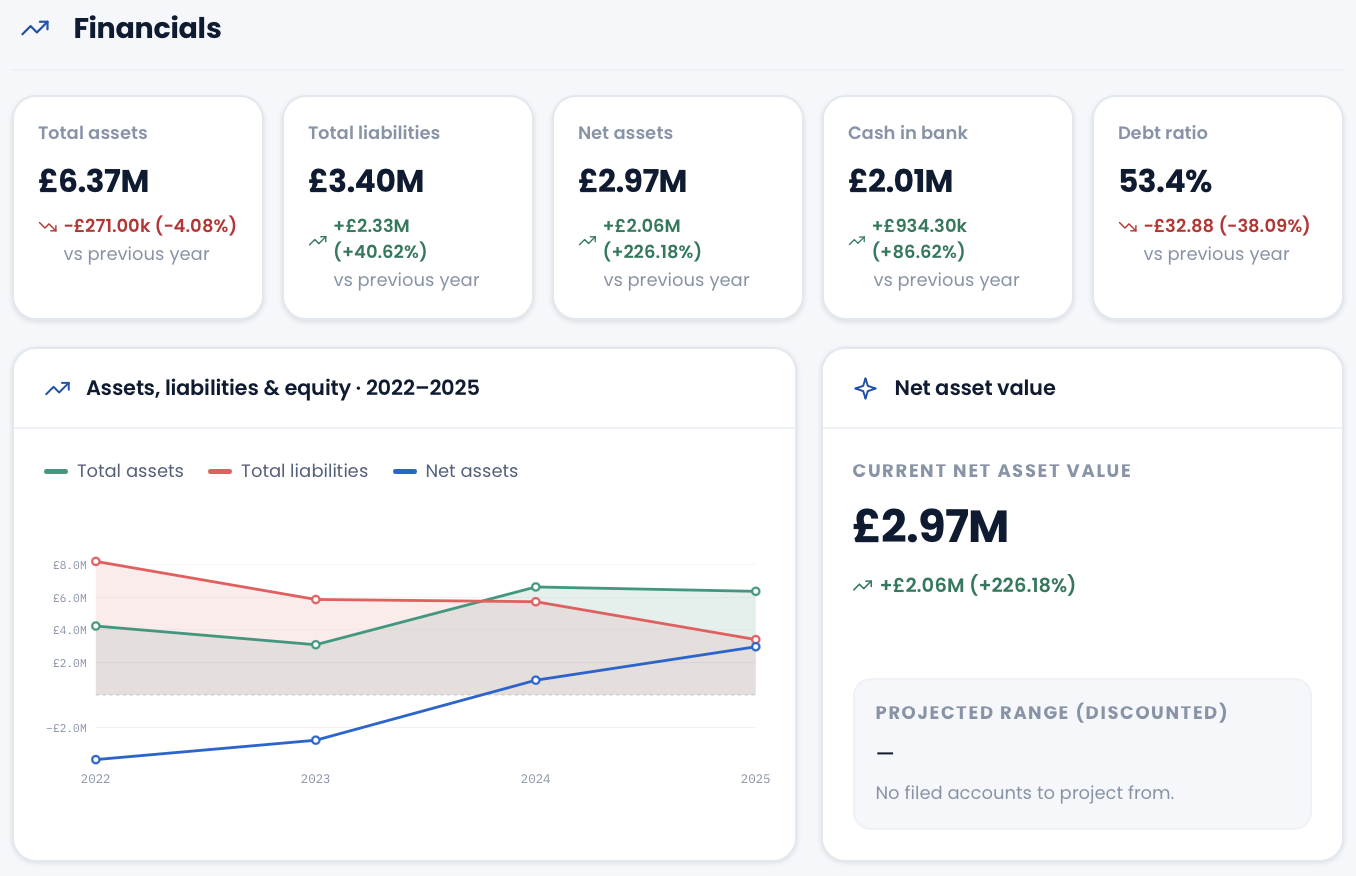
Filed accounts show how a company has performed, but a single year can mislead. Several years side by side show whether revenue, profit, assets and debt are moving in the right direction. A financial health check adds AI-generated insights and an indicative valuation, so a reviewer can judge the trend in minutes rather than reading every set of accounts.
4. Legal and credit risk
County Court Judgments show which companies are not paying their debts, and registered charges show which lenders already hold security over the assets. Read together, they reveal financial pressure that the accounts may not yet show. See our company CCJ check for how judgments and charges are presented.
5. Sanctions, adverse media and watchlists
Before onboarding a client or signing a supplier, regulated firms and careful buyers screen the company against sanctions lists such as UK HMT, OFAC SDN and the UN Consolidated list, check for adverse media coverage, and look for entries on lists such as HMRC's deliberate tax defaulters. KYC and AML screening logs each result as an alert so possible matches can be reviewed and resolved.
6. Networks and connected companies
Risk often sits next door: in a sister company that owns the property, a dormant company with old liabilities, or a business run by the same people at the same address. Mapping the companies and people connected to a subject, through shared directors, PSCs and addresses, is how undisclosed relationships and conflicts of interest come to light. Corporate Links maps these networks in one view.
Where UK Corporate Intelligence Data Comes From
The UK has one of the most open corporate records systems in the world. The main sources are:
- Companies House: company details, officers, PSCs, filed accounts, confirmation statements, charges and filing history.
- HM Land Registry: who owns land and property in England and Wales, including datasets of properties owned by UK and overseas companies.
- The Register of Overseas Entities: the beneficial owners of overseas entities that hold UK land, held by Companies House.
- The Register of Judgments, Orders and Fines: County Court Judgments and High Court judgments in England and Wales, run by the Registry Trust.
- The Gazette: official notices, including insolvency notices and proposals to strike off companies.
- The Insolvency Service: the registers of disqualified directors and individual insolvencies.
- Sanctions and watchlists: the UK HMT sanctions list, the OFAC SDN list, the UN Consolidated list and HMRC's list of deliberate tax defaulters.
Each source is useful on its own. The value of corporate intelligence comes from joining them up, so a charge, a judgment and a director's dissolved companies can be seen as one story rather than three separate searches.
How ECCTA 2023 Changed Corporate Intelligence
The Economic Crime and Corporate Transparency Act 2023 is the biggest change to UK company law in a generation. Its headline requirement, identity verification for directors and PSCs, became a legal requirement on 18 November 2025, with a 12-month transition for existing individuals ending on 17 November 2026. Failing to verify is an offence, and a company cannot file its confirmation statement until all its directors have verified.
For anyone assessing a UK company, that creates a new data point. An unverified director at a target, borrower, client or supplier is a compliance issue that can hold up filings, transactions and post-completion changes. Read our director ID verification guide for UK advisers for how to check status across a client book.
How Teams Use Corporate Intelligence
- M&A and private equity: screening targets, mapping group structures and validating ownership before heads of terms. See our M&A due diligence checklist.
- KYC and AML compliance: verifying corporate clients, their directors and beneficial owners at onboarding. See the corporate client KYC checklist.
- Credit and lending: assessing whether a borrower or customer can pay, using financial history, CCJs and charges.
- Procurement and supplier risk: vetting suppliers and subcontractors before contracts are signed. See supplier due diligence.
- Investigations and asset tracing: following money and assets through connected companies. See our asset tracing checklist.
- Sales and business development: finding and qualifying prospects that match an ideal customer profile.
How to Choose a Corporate Intelligence Platform
Platforms range from global credit databases to specialist tools built for one jurisdiction. When comparing them, test each on the companies you actually deal with:
- Depth where you work: broad international coverage is no substitute for detailed data on the companies in your pipeline.
- Ownership to individuals: does it trace PSC chains through corporate layers, or stop at the first company?
- Director histories: does it show dissolved and failed companies, not just current appointments?
- Legal risk: does it show CCJs with their status, and registered charges?
- Screening: which sanctions and watchlists does it cover, and how are possible matches handled?
- Scale and audit trail: can it check many companies at once, and does it keep a dated record of each check?
For a side-by-side comparison, see our ranking of 8 due diligence platforms for UK private equity, or explore the Probe Digital platform.
Corporate Intelligence Checks
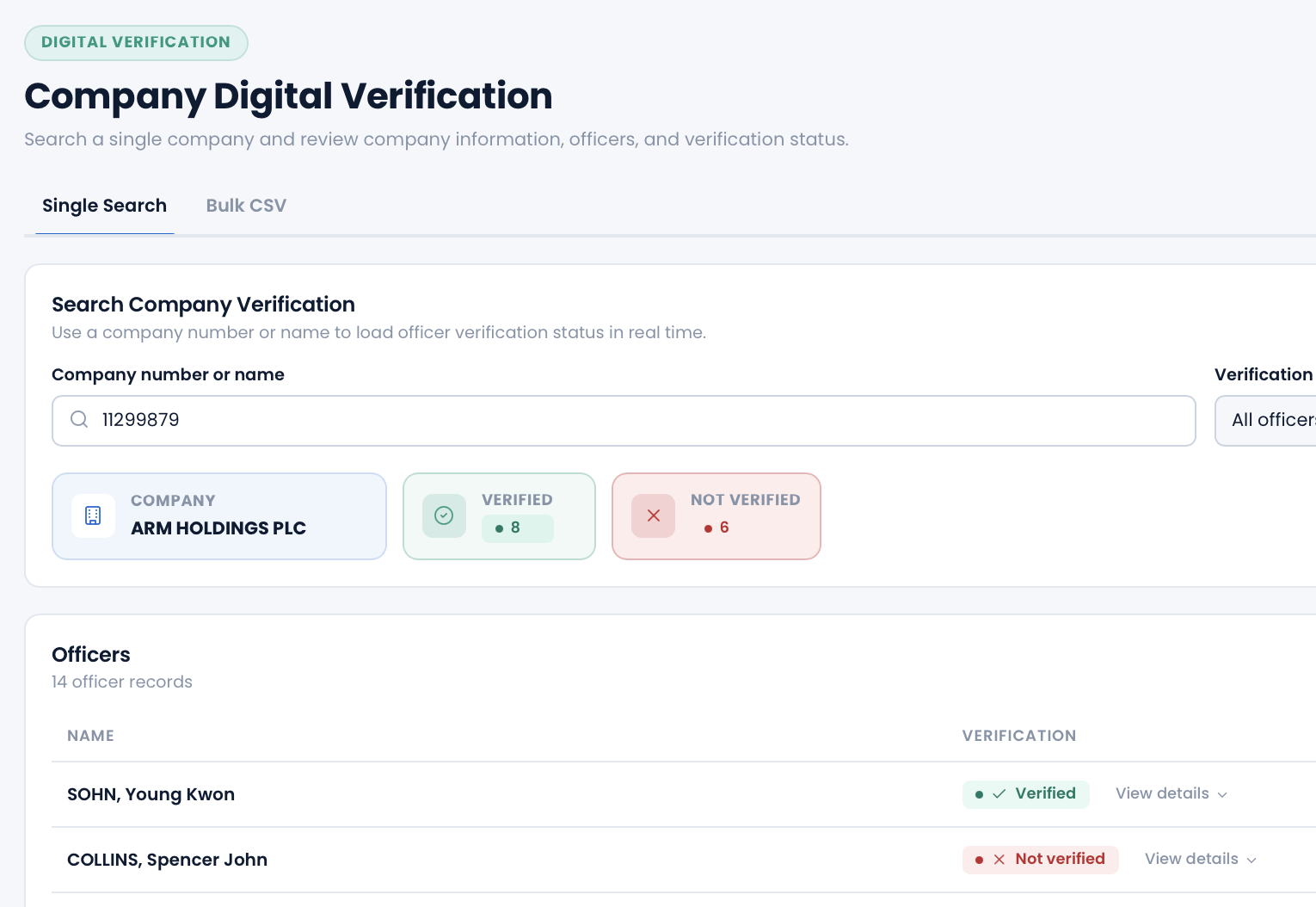
Director Background Check
See a director's ECCTA identity verification status, appointments and linked companies, CCJ and charges exposure across their network, and red flag patterns such as repeated dissolutions.
Beneficial Ownership & PSC Check
Trace people with significant control and ultimate beneficial owners through corporate layers and foreign owners, so you validate who really controls a company.
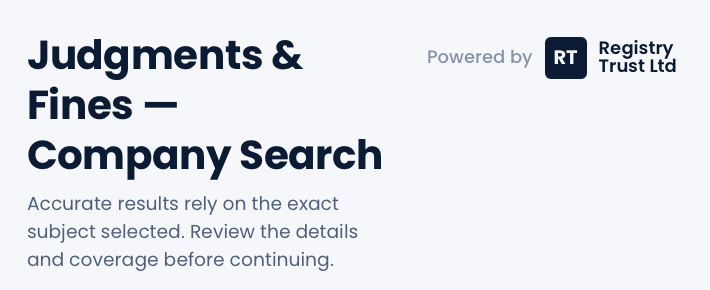
Judgement Check (CCJs)
Check County Court Judgments registered against a UK company and review them alongside its registered charges, so unpaid debts and secured lending surface early.
Financial Health Check
Review a minimum of three years of financial history, AI-generated financial insights, and a valuation based on asset CAGR or, where available, a sector EBITDA multiple.
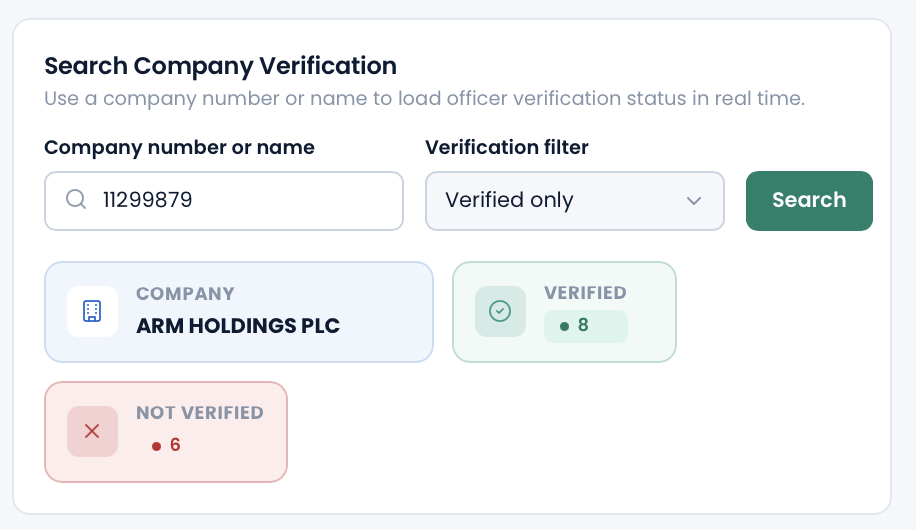
ECCTA Compliance
Confirm whether a company's directors have completed mandatory identity verification under the Economic Crime and Corporate Transparency Act 2023, before full enforcement in November 2026.
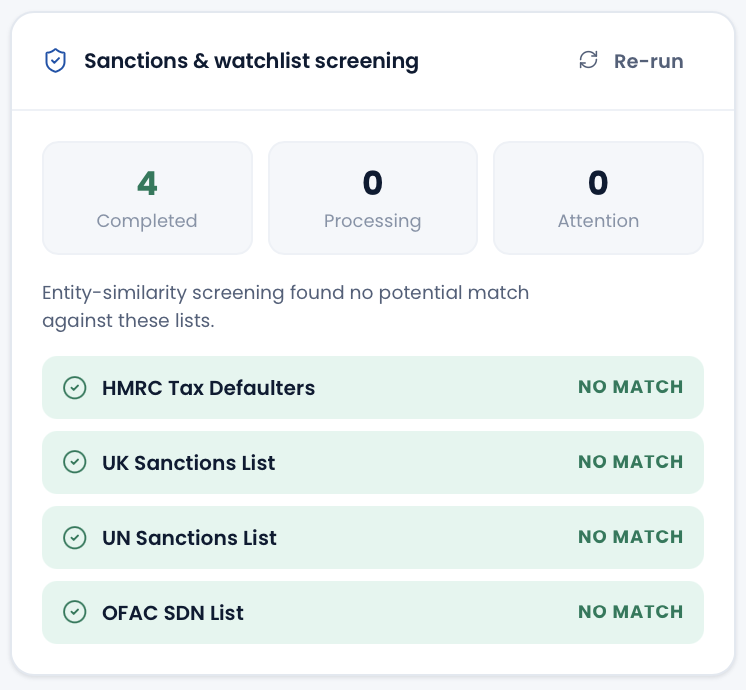
KYC & AML Screening
Screen companies against UK HMT, OFAC SDN and UN Consolidated sanctions lists, adverse media and the UK tax defaulters list, with possible matches tracked in a review workbench.
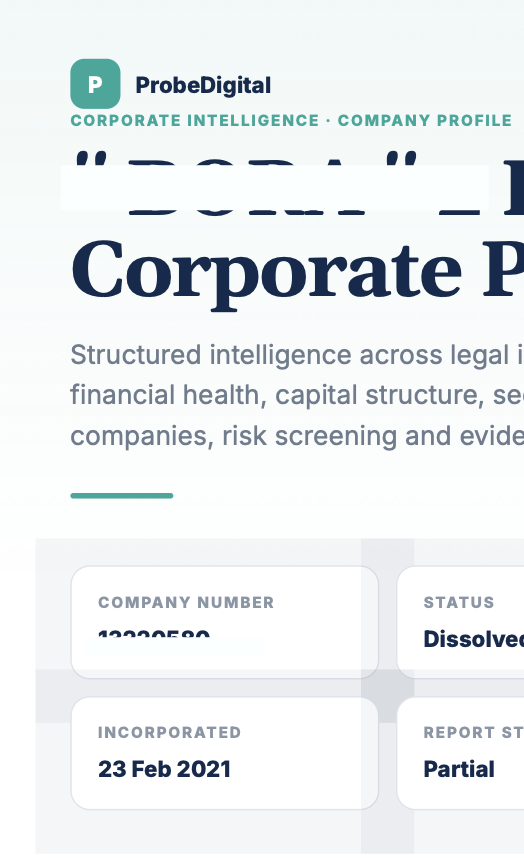
Company Intelligence
Corporate Profile
Get a full overview of any UK company or officer: incorporation and appointment dates, key contacts, registers, trading address, financials and filing history.
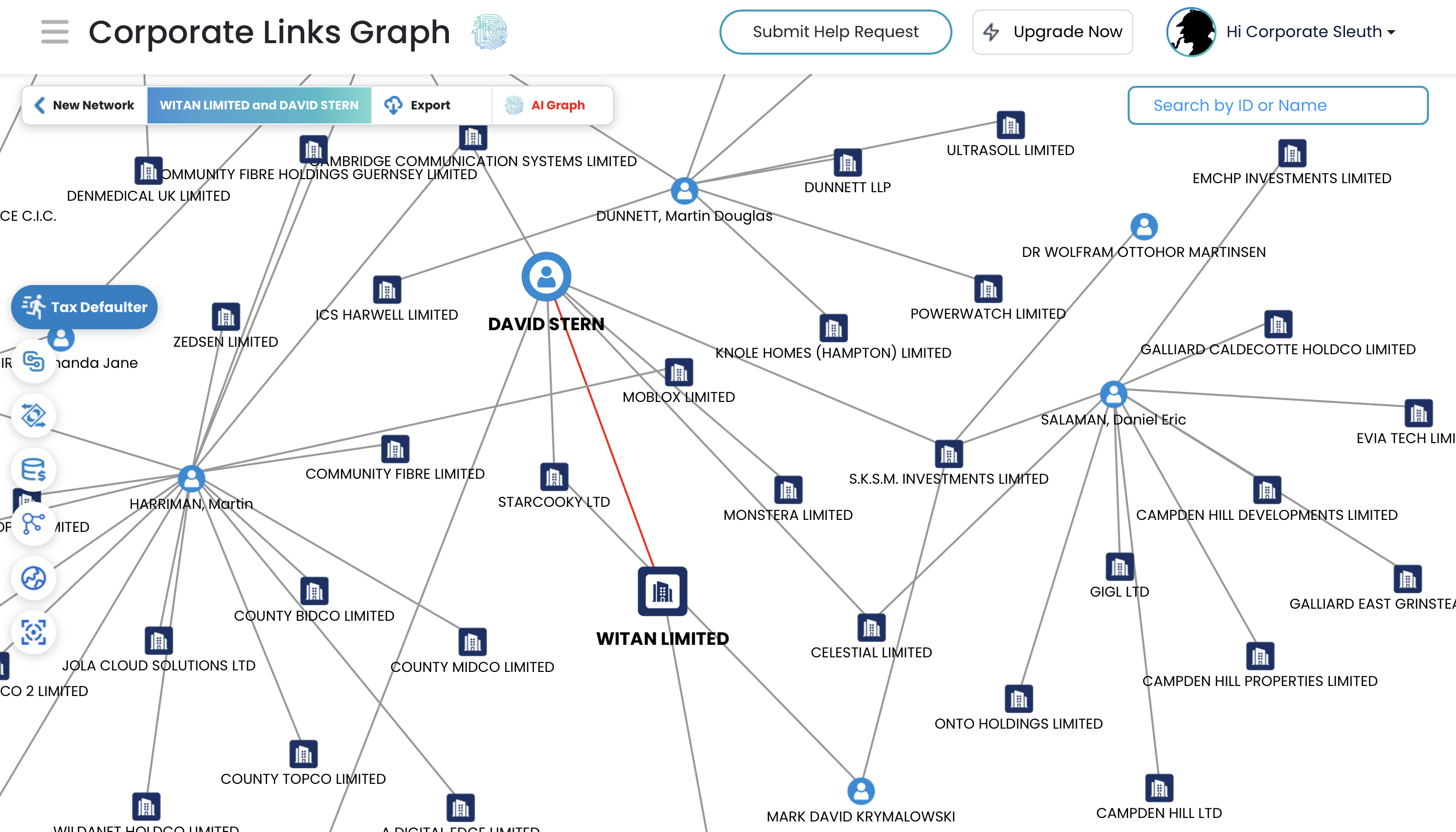
Corporate Links
Map the links between companies, directors, officers and persons with significant control to uncover undisclosed relationships and conflicts of interest.
Corporate Search
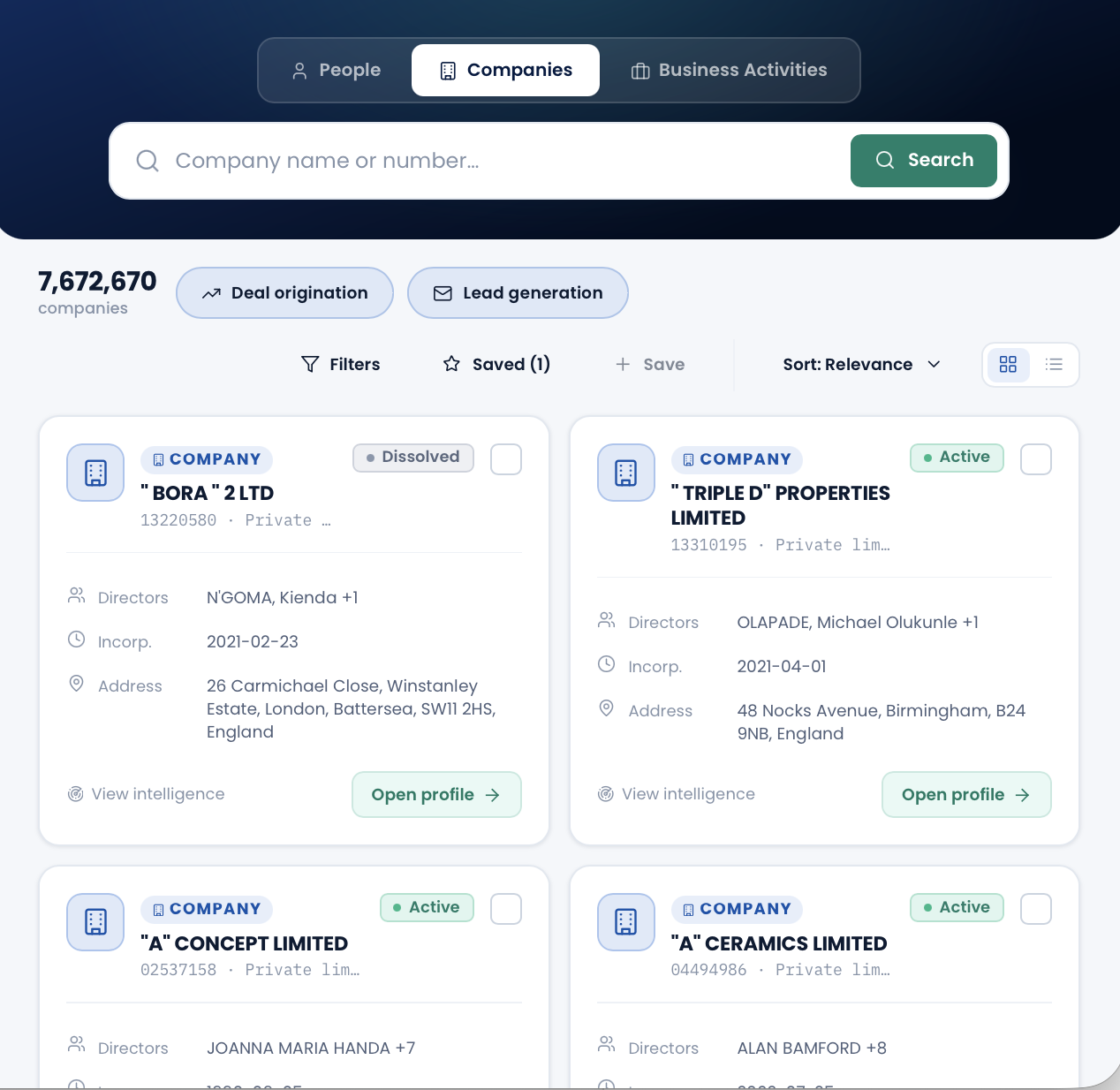
Search and filter UK companies to build target and prospect lists, then download enriched company data for outreach and CRM.
UK & Foreign Ownership
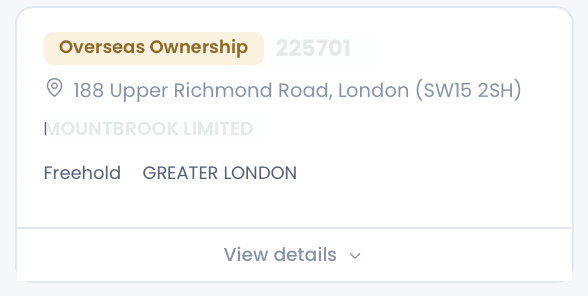
Identify UK companies owned by UK and overseas entities, and see where control of a business sits outside the UK.
Bulk Portfolio Audit
Upload a CSV of companies to screen an entire acquisition pipeline, portfolio or client book at once and receive consolidated compliance output.
Filing History & Observations
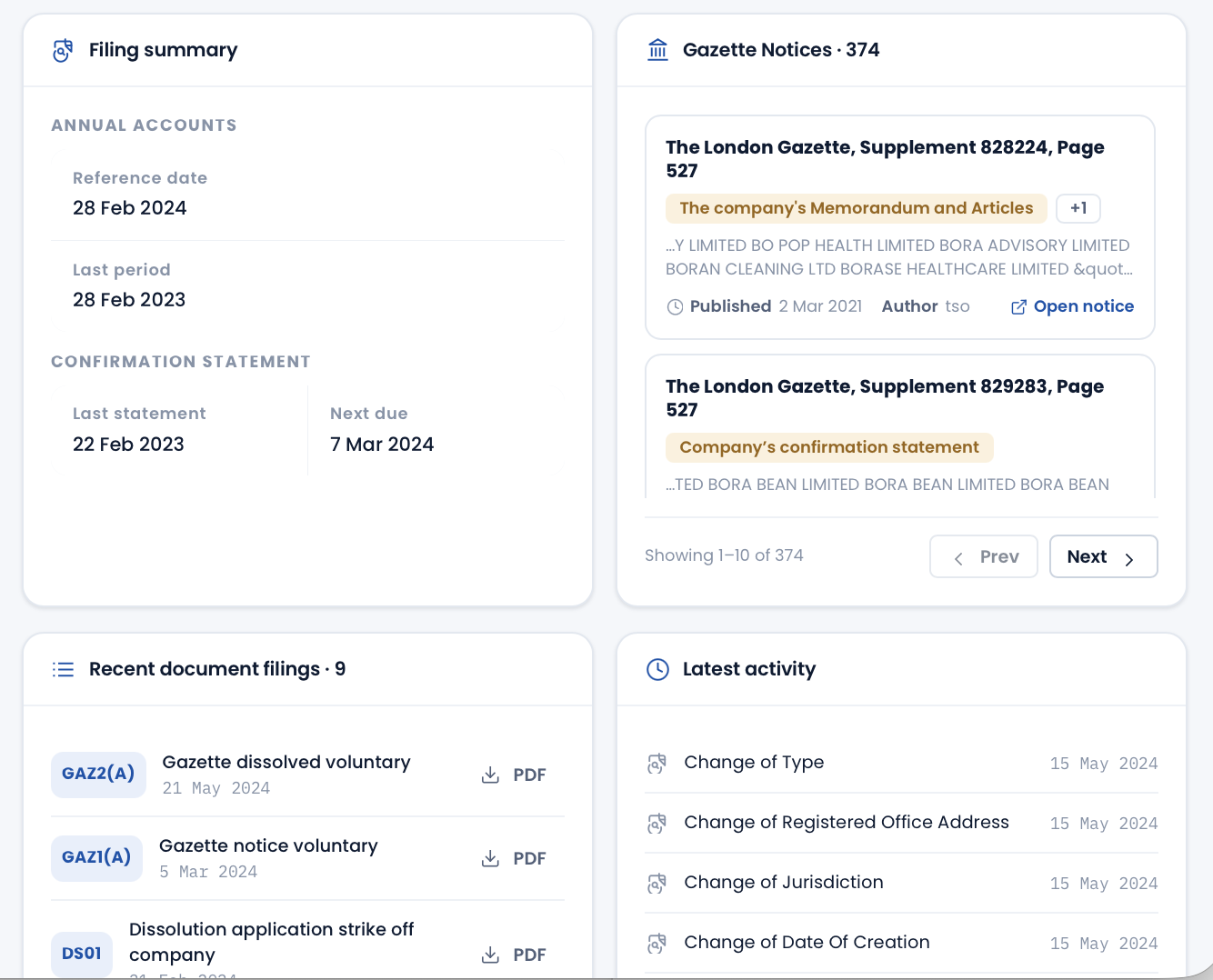
Follow a company's recent filings and activity at Companies House, with observations that flag changes worth a closer look.
Why Teams Choose ProbeDigital
What Is Corporate Intelligence?
Corporate intelligence is the gathering and analysis of information about a company to support a business decision: whether to invest in it, lend to it, buy it, onboard it as a client, or sign it as a supplier. It answers three questions: who really owns and controls the company, how healthy it is, and what risks come with it.
In the UK, most of the raw material is public, held by Companies House, HM Land Registry, the courts and government sanctions lists. The intelligence comes from joining those records up, testing them against each other and turning them into a judgement you can act on and defend later.
It differs from a credit report, which gives a score, and from full legal due diligence, which comes later and costs more. Corporate intelligence sits in between: fast enough to screen many companies, deep enough to surface the red flags that change a decision.

Frequently Asked Questions
What is corporate intelligence?
Corporate intelligence is the gathering and analysis of information about a company, such as its ownership, directors, finances, legal record and sanctions exposure, to support a decision to invest, lend, acquire, onboard or contract with it.
Is corporate intelligence the same as due diligence?
They overlap. Corporate intelligence is the information and analysis; due diligence is the wider process that uses it. Corporate intelligence usually comes first, screening companies quickly so that full legal and financial due diligence is spent on the ones that pass.
Where does UK corporate intelligence data come from?
Mainly from Companies House (company details, officers, PSCs, accounts and charges), HM Land Registry and the Register of Overseas Entities (property), the Register of Judgments, Orders and Fines (CCJs), The Gazette (insolvency notices), sanctions lists such as UK HMT, OFAC SDN and the UN Consolidated list, and HMRC's published list of deliberate tax defaulters.
How has ECCTA 2023 changed corporate intelligence?
The Economic Crime and Corporate Transparency Act 2023 made identity verification mandatory for UK company directors and people with significant control, with a 12-month transition ending on 17 November 2026. Verification status is now a new signal to check, and an unverified director is a compliance risk in any deal or onboarding.
Is the PSC register enough to find the true owner?
No. It is a starting point. Where a PSC is another company, the chain has to be traced upwards until it reaches individuals, and overseas owners or trusts need further research.
Who uses corporate intelligence?
Private equity and venture capital investors, in-house M&A teams, compliance and KYC teams, lenders and credit teams, procurement teams, accountants, lawyers, investigators and sales teams.
What should I look for in a corporate intelligence platform?
Depth on the jurisdiction you work in, ownership tracing to individuals, director histories including dissolved companies, CCJs and charges, financial analysis, sanctions and adverse media screening, bulk checks and an auditable record of each search. See our ranking of due diligence platforms for UK private equity.
How do I get started with Probe Digital?
Create an account to start searching UK companies straight away, or book a 40-minute demo and we will walk you through the checks that matter most to your team.
Get Access Today
Put UK Corporate Intelligence to Work
Create an account to check ownership, directors, CCJs, financial health and sanctions exposure for any UK company in one place. Prefer a walkthrough? Book a demo and we will show you the checks that matter most to your team.
